
The RV refrigerator is one of the most misunderstood appliances in any rig. Most RV fridges are absorption-style units that operate completely differently from the compressor refrigerators in your home, and treating them the same way is the source of most RV fridge problems. Here's what you need to know.
Absorption vs. Compressor Refrigerators
Most RV refrigerators use an absorption cooling system that runs on either propane or 120V electric power. Unlike a home refrigerator, absorption fridges have no moving parts — they use heat to drive a chemical cooling process. This is why they're quieter but also why they're more sensitive to operating conditions. Newer RVs increasingly use 12V compressor refrigerators, which work more like home units and are generally more efficient.
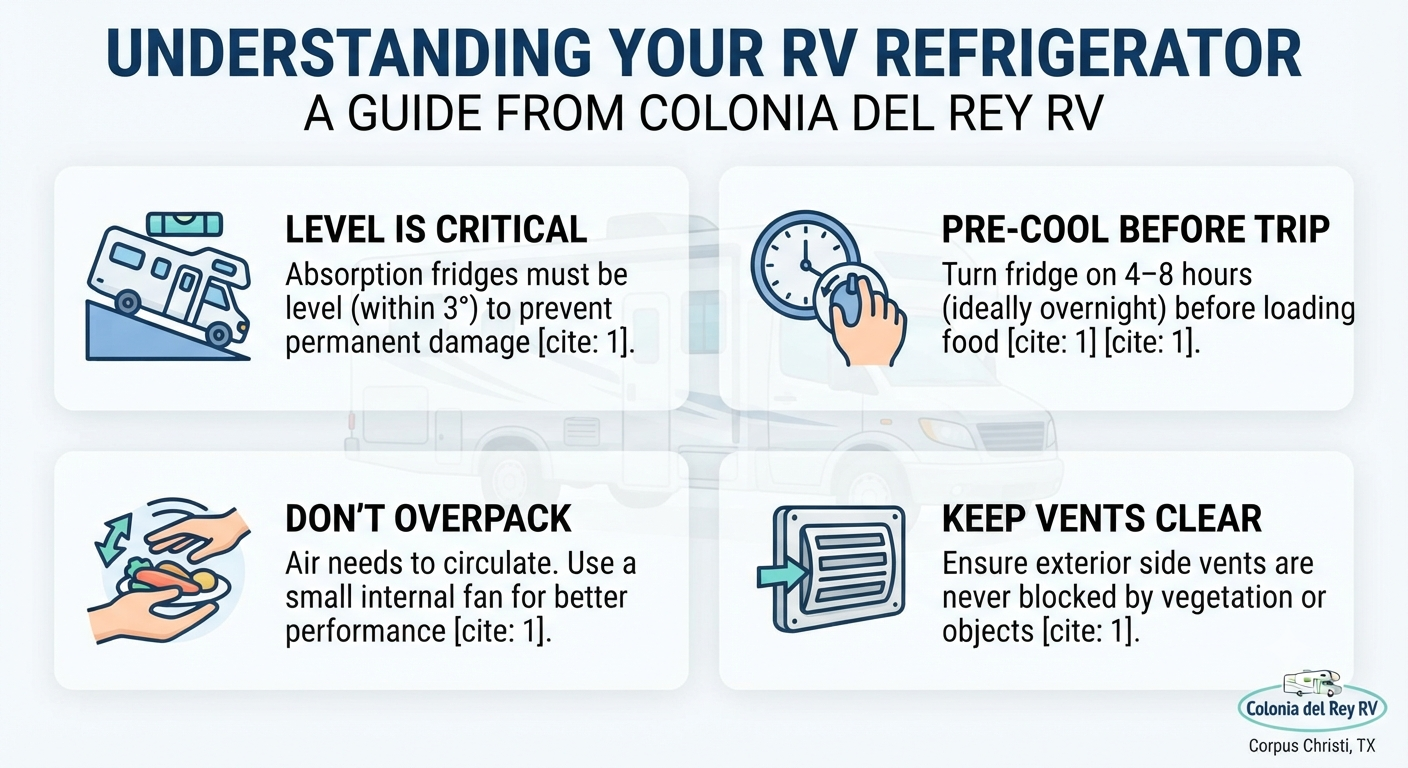
Level Is Critical for Absorption Fridges
An absorption fridge must be reasonably level to work properly. Running off-level for extended periods allows the cooling chemicals to pool incorrectly, which can permanently crystallize the cooling unit — a repair that often costs more than a replacement. Keep your rig within 3 degrees of level when the fridge is operating.
Pre-Cool Before Your Trip
Turn your RV refrigerator on at least 4–8 hours before loading food, ideally the night before your trip. Absorption fridges cool slowly. Loading warm food into a warm fridge and expecting it to get cold quickly is a recipe for spoilage and food safety issues.
Don't Overpack It
Air needs to circulate inside the fridge to maintain even temperature. Leave space between items and don't block the vents inside. A small fan placed inside the fridge compartment can dramatically improve cooling performance in warm weather.
Keep the Exterior Vents Clear
Absorption refrigerators vent heat through exterior vents on the side of the RV. Make sure these vents are never blocked by vegetation, furniture, or other objects. Blocked vents cause the fridge to run warm and can eventually damage the cooling unit.
Driving with the Fridge On
Many RVers run their fridge on propane while driving to keep food cold. This is generally safe if your propane system is in good condition. However, be aware that most propane regulations require tanks to be shut off in tunnels and on some ferries. Some newer RVs have 12V refrigerators specifically to avoid this issue.
If your RV fridge isn't cooling like it should or you're shopping for a unit with better refrigerator options, come talk to us at Colonia del Rey RV in Corpus Christi. We can help you understand your current fridge or find a new rig with the setup you need.